Self-Hosting LLMs vs. Cloud APIs: The 2026 Showdown
Uncover the real costs of deploying open-source LLMs vs. using managed APIs. Learn when to self-host for savings and when cloud wins for performance.
5 min read174 views
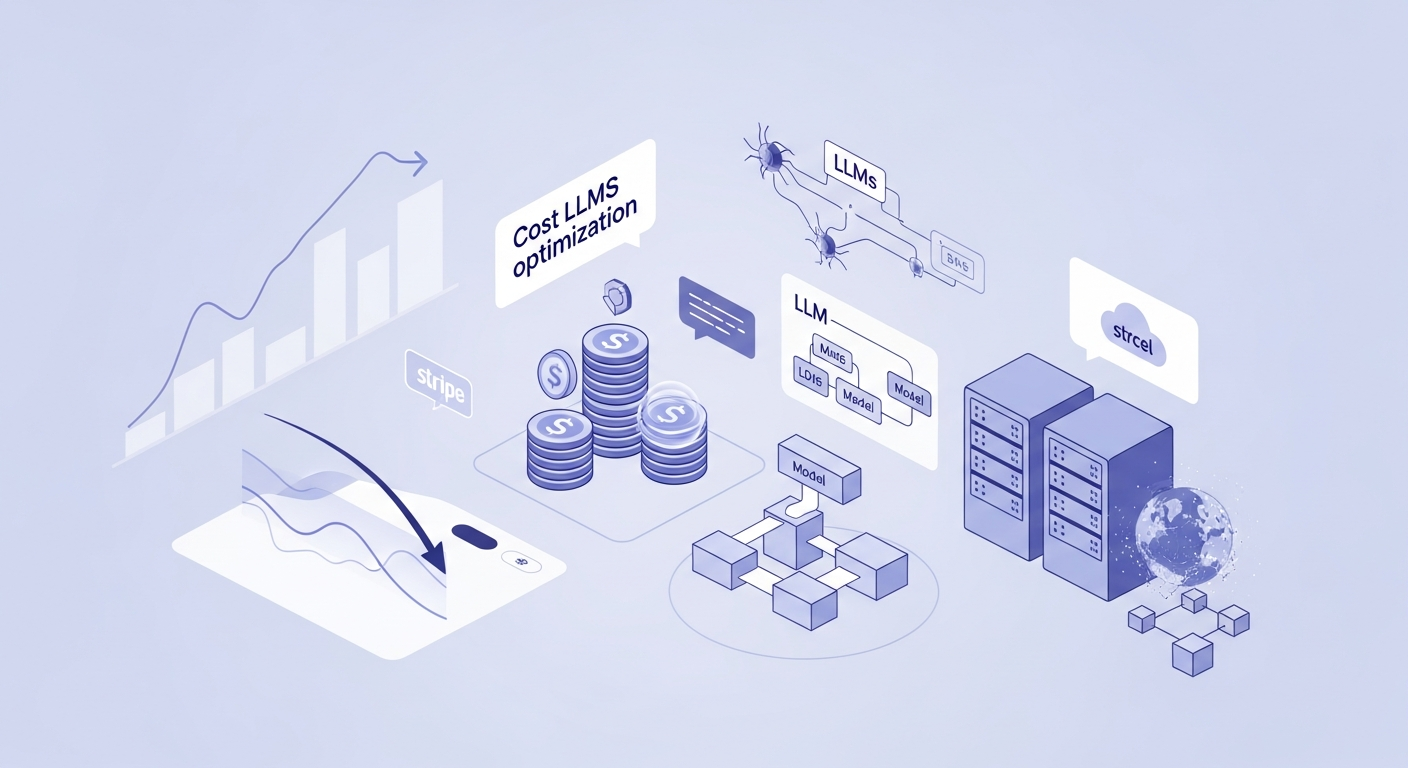
The siren song of "free" open-source Large Language Models (LLMs) is loud in 2026. Download Llama 3.3, deploy Mixtral 8x7B – and poof, your AI bill vanishes, right? Not so fast. While open-weight models have dramatically matured, the decision to self-host versus relying on cloud API services is far from a simple economic calculation. It's a nuanced technical and financial trade-off that many teams get wrong, leading to unexpected cost anxiety and performance bottlenecks.
As a senior engineer, I've seen this debate play out repeatedly. The truth is, there’s no universal answer. The optimal choice for your team hinges on your specific volume, latency, compliance needs, and — critically — your hidden infrastructure costs. Let's break down the 2026 reality.
The Illusion of "Free": Unmasking Self-Hosting's True Costs
See what AI is actually costing your team
Real data from a real engineering team. No sign-up required.
The biggest misconception is that open-source LLMs eliminate costs. They don't; they merely shift them. You exchange variable, per-token API charges for fixed infrastructure investments and significant operational overhead.
Here’s what typically gets overlooked:
1. GPU Hardware: The Elephant in the Server Room
Whether you're buying dedicated NVIDIA H100s (costing $30,000-$40,000 each) or renting cloud GPUs, this is your foundational expense. While cloud GPU pricing has seen a significant drop (H100 instances under $2.50/hr on specialist providers), you're still paying a premium for on-demand access. A crucial point: an idle GPU is a liability, not an asset. Many teams overprovision, leading to substantial waste.
2. DevOps & Engineering Overhead: The Silent Killer
This is often the largest line item in self-hosting Total Cost of Ownership (TCO). Deploying, integrating, scaling, monitoring, and updating LLMs is not a trivial task. Expect to dedicate at least 0.5-1 FTE infrastructure engineer, costing upwards of $75,000-$100,000 annually in fully loaded costs. This includes:
- Deployment & Integration: Setting up inference servers (vLLM, TensorRT-LLM, TGI), Docker, Kubernetes, and API layers.
- Scaling & Reliability: Implementing auto-scaling, load balancing, health checks, and redundancy to handle variable traffic.
- Maintenance & Updates: Regular security patches, dependency management, and updating model versions.
3. Infrastructure & Operational Expenses
Beyond the GPUs themselves, you're on the hook for:
- Power & Cooling: Running high-end GPUs consumes substantial electricity, with cooling adding 25-40% on top.
- Networking: Egress fees from cloud providers can add $2,600-$3,600/month for 1 TB/day of inference output.
- Storage: Housing large model weights and inference logs.
- Redundancy: N+1 or N+2 for power and cooling in on-premise setups.
According to industry analysis, even a minimal internal self-hosted deployment can run $125K–$190K annually. For enterprise-scale, this can exceed $12M over 18 months, with cloud AI totaling $860K versus self-hosted at $345K (a 55% TCO reduction after 12-18 months) for specific workloads.
When Self-Hosting Makes Sense (The "Why")
Despite the hidden costs, self-hosting is a powerful play for specific use cases:
1. High-Volume, Predictable Workloads
This is the undeniable sweet spot. When processing millions or billions of tokens daily with consistent traffic patterns, the fixed cost of self-hosting amortizes quickly. Breakeven points vary, but studies show self-hosting can become cheaper when exceeding 2 million tokens per day or around 11 billion tokens per month for premium models. One fintech company reported an 83% reduction in monthly AI spend by moving to a hybrid self-hosted approach for high-volume tasks.
2. Strict Data Privacy & Compliance
For regulated industries (healthcare, finance, legal) dealing with sensitive data (HIPAA, PCI-DSS, GDPR, SOC 2), keeping data entirely within your controlled environment is non-negotiable. Self-hosting eliminates concerns about third-party data processing.
3. Latency-Critical Applications
For real-time applications like voice assistants or interactive gaming, network latency from API calls (50-200ms) is unacceptable. Self-hosted models running locally can achieve sub-10ms response times.
4. Deep Customization & Control
When you need to heavily fine-tune models on proprietary data, control exact model versions, or build highly specialized toolchains, open-source models offer unparalleled flexibility. Closed APIs often limit this level of control.
When Cloud APIs Still Win (The "Why Not")
For most developers and businesses, cloud API services remain the default for good reason:
1. Simplicity & Speed to Market
With APIs, you integrate, pay per use, and focus on your product, not infrastructure. There's no GPU procurement, no server rack setup, and no complex MLOps. This is invaluable for prototyping and initial product launches.
2. Variable or Unpredictable Usage
If your AI traffic is bursty, highly seasonal, or simply unknown, API services scale seamlessly. You only pay for what you use, avoiding expensive idle GPU costs.
3. Access to Frontier Models
The bleeding edge models like GPT-5 and Claude Opus are exclusively available via APIs. Their massive computational requirements mean they cannot be self-hosted under any circumstances. If peak capability is paramount, APIs are the only choice.
4. Smaller Teams & Lower Volumes
For workloads under the breakeven point (e.g., typically under 50M tokens/day or ~11B/month for premium models), API costs are almost always lower. Small teams without dedicated GPU expertise benefit significantly from managed services.
5. Specialized Managed Services for Open-Source LLMs
The market has evolved. Services like Hugging Face Inference Endpoints, SiliconFlow, Novita AI, and GMI Cloud offer managed hosting for open-source models, often with better pricing and performance than direct hyperscaler offerings. This "middle ground" offers some self-hosting benefits without the full infrastructure burden.
The Hybrid Approach: Best of Both Worlds
The most pragmatic strategy in 2026 is often a hybrid one. Route your predictable, high-volume, less complex tasks to self-hosted open-source models for cost savings. For burst traffic, highly complex tasks, or those requiring frontier model intelligence, leverage cloud APIs. This can lead to 30-50% cost reductions while maintaining performance and access to cutting-edge capabilities.
Critical AI Cost Optimization Strategies (Regardless of Hosting)
No matter your choice, these strategies will save you money:
- Smart Model Selection & Quantization: Don't use a flagship model for a simple task. Smaller, fine-tuned models can outperform larger ones on domain-specific tasks and run 10-100x cheaper. Quantization (e.g., 4-bit) dramatically reduces memory needs with minimal quality impact.
- Batch Processing: For non-real-time tasks, batch requests can cut costs by 50% for inputs and outputs by significantly improving GPU utilization.
- Caching & Deduplication: System prompts, repeated queries, and reference documents are expensive to re-process. Implement prompt caching at the application layer to eliminate redundant token usage.
- Traffic Forecasting & Auto-Scaling: Precisely matching compute capacity to demand is crucial. Forecast-aware auto-scaling can achieve up to 25% savings in GPU-hours.
Making a Better Technical Choice with CostLens
Navigating this complex landscape requires clear visibility into your AI spend and performance. This is where tools like CostLens shine. By providing real-time LLM cost tracking and unified analytics, CostLens allows you to truly compare the TCO of your self-hosted deployments against your API usage. Our multi-provider intelligent model routing can automatically direct traffic to the most cost-effective solution (whether self-hosted or API-based) based on your predefined rules, even falling back to cheaper models if budget limits are hit. Plus, our built-in prompt caching ensures you're never paying for redundant tokens. Understanding your actual usage patterns is the first step towards massive savings.
The future of AI inference is about informed choices, not blind adherence to "open source" or "cloud-first" mantras. By understanding the true costs and benefits of each approach, you can build performant, cost-efficient, and future-proof AI applications.
Track your AI costs automatically
Connect GitHub in 30 seconds. See your AI ROI report instantly.
LLM inference costsopen source AIcloud AI pricingGPU costsAI cost optimizationself-hosting AImanaged LLM APIsperformance trade-offs
See what AI is actually costing your team
Real data from a real engineering team. No sign-up required.